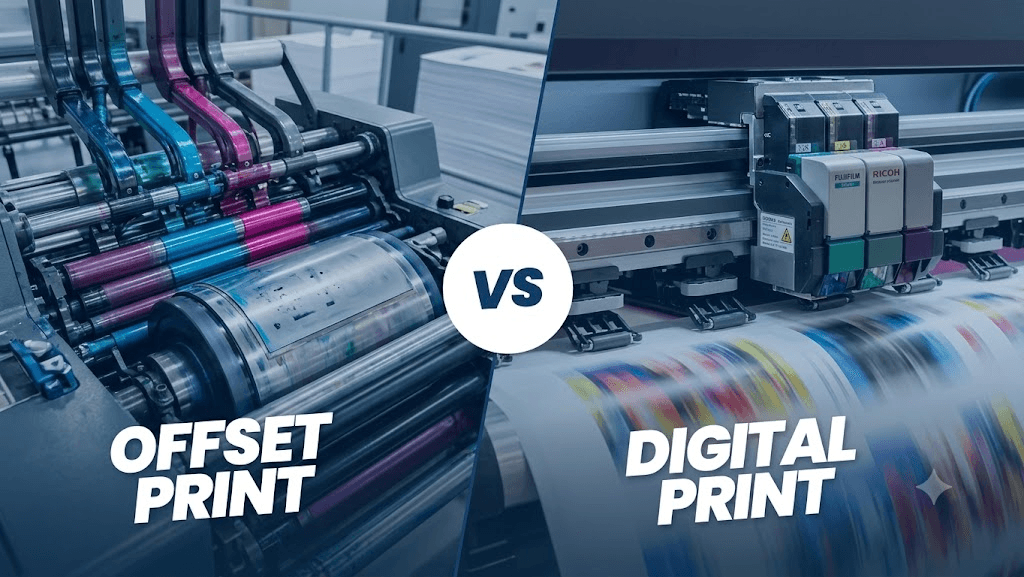
If you've ever requested a print quote and been asked "digital or offset?", you're not alone in wondering what the difference actually is — or why it matters. Both methods can produce excellent results, but they're built for different jobs. Choosing the right one affects your cost, turnaround time, and final print quality.
At Al Huda Graphics, we've been printing across Dubai and Sharjah since 2006, and this is one of the questions our team answers almost every single day. Here's a straightforward breakdown to help you decide.
What Is Digital Printing?
Digital printing works much like a high-end office printer — your design file is sent directly to the machine and printed straight onto the material, with no setup plates required.
Best for:
Small to medium print runs (from a single copy up to a few hundred)
Projects with tight deadlines
Jobs that need variable data (different names, numbers, or QR codes on each piece)
Quick reprints or last-minute edits
Common uses: business cards, flyers and catalogues, personalized invitations, short-run brochures, and proofs before a larger offset run.
Trade-off: Per-unit cost stays roughly the same whether you print 10 or 500 pieces, so digital becomes less cost-effective at very high volumes.
What Is Offset Printing?
Offset printing uses custom plates — one for each color — that transfer ("offset") ink onto a rubber blanket and then onto the paper. It's the traditional method behind most large-scale commercial printing, known for sharp detail and precise, consistent color across thousands of copies.
Best for:
Large print runs (typically 500+ pieces)
Projects where exact color-matching (Pantone/spot colors) is critical
Jobs printed on specialty stock or with premium finishes
Long-term marketing materials like magazines, booklets, and catalogues
Trade-off: Offset requires plate setup, so it involves more lead time and isn't cost-efficient for small quantities — but the per-unit price drops significantly as volume increases.
Digital vs. Offset: Quick Comparison
Digital Printing | Offset Printing | |
|---|---|---|
Best for | Small–medium runs | Large runs |
Turnaround | Fast | Longer (plate setup required) |
Cost per unit | Consistent, higher at scale | Lower at high volumes |
Color accuracy | Very good | Excellent, precise Pantone matching |
Customization | Supports variable data | Same design across all copies |
Typical jobs | Business cards, flyers, quick reprints | Magazines, bulk brochures, packaging |
So, Which Should You Choose?
A simple way to think about it:
Ordering under a few hundred pieces, need it fast, or want each piece slightly different? Go digital.
Printing in bulk, need exact color matching, or producing something like a magazine, book, or large marketing campaign? Go offset.
Still not sure? That's normal — the right choice often depends on paper type, finish, and deadline as much as quantity. Our team reviews each order individually and recommends the most cost-effective method for your specific project, whether that's a batch of stickers, a run of banners, or a full company catalogue.
Have a Project in Mind?
Whether you need one sample piece or ten thousand, Al Huda Graphics has the equipment and experience to get it right — from business cards to full-scale packaging and print runs. Get in touch with our team or message us on WhatsApp for a free consultation on the best printing method for your next order.
